History & Performance of Pumpkin's Products in Space
Pumpkin's products have proven reliability in space applications. A listing of application's of Pumpkin's products in space is presented below, followed by per-mission details.
| Qty | Description | Rev |
First Flight | Mission(s) |
|---|---|---|---|---|
3 |
Pumpkin Space MISC 2 nanosatellite carrier | A |
2010 |
QbX1, QbX2, Aeneas |
1 |
Pumpkin Space 56W deployable solar array (with 56 UTJ cells, 8S7P) | A |
2010 |
Caerus/Mayflower |
8 |
CubeSat Kit Motherboard (MB) | D |
2010 |
QbX1, QbX2 , Caerus/Mayflower, DICE-1, DICE-2, Aeneas, CINEMA, CSSWE |
1 |
CubeSat Kit Pluggable Processor Module (PPM) A1 with TI ® MSP430F2618 | A |
2012 |
CSSWE |
2 |
CubeSat Kit Pluggable Processor Module (PPM) B1 with SiLabs® C8051F120 | A |
2010 |
QbX1, QbX2 |
4 |
CubeSat Kit Pluggable Processor Module (PPM) D1 with Microchip® PIC24FJ256GA110 | A |
2010 |
Caerus/Mayflower, DICE-1, DICE-2, Aeneas |
4 |
CubeSat Kit Pluggable Processor Module (PPM) D2 with Microchip® dsPIC33FJ256GP710 | A |
2012 |
CINEMA |
6 |
CubeSat Kit Flight Module (FM430) with TI's MSP430F149/169/1611/1612 | C |
2008 |
Delfi-C3, HawkSat-1, ITU-pSAT1, AIS Pathfinder 2 , GOLIAT, e-st@r |
1 |
B |
2007 |
Libertad-1 | |
3 |
CubeSat Kit 1U structure | D |
2009 |
ITU-pSAT1, Caerus/Mayflower , GOLIAT |
1 |
C |
2009 |
HawkSat-1 | |
1 |
B |
2007 |
Libertad-1 | |
4 |
CubeSat Kit 3U structure | D |
2010 |
RAX, RAX-2, CSSWE |
1 |
C |
2008 |
Delfi-C3 | |
multiple |
CubeSat Kit Hinge | all |
2010 |
QbX1, QbX2, Caerus/Mayflower, Aeneas |
multiple |
CubeSat Kit Solar Panel Clips | all |
2007 |
Libertad-1, HawkSat, ITU-pSAT1, RAX, QbX1, QbX2, Caerus/Mayflower, RAX-2, CSSWE, ... |
multiple |
CubeSat Kit Midplane Standoffs | all |
2010 |
RAX, QbX1, QbX2, Caerus/Mayflower, RAX-2,CSSWE, ... |
2 |
Salvo Pro RTOS for PIC24 MCUs and dsPIC® DSCs | 4 |
2011 |
DICE-1, DICE-2 |
multiple |
Salvo Pro RTOS for TI's MSP430 | 4 |
2007 |
Libertad-1, AIS Pathfinder 2, RAX (multiple), GOLIAT, CSSWE |
3 |
Salvo Pro RTOS for PICmicro® MCUs | 3 |
2007 |
MAST |
| multiple | Salvo Pro RTOS for Hitachi SH2 (customer build) | 4 |
2009 |
Microhard MHX425/920A/2420 transceivers |
| Aeneas | September 13, 2012 | |
|---|---|
|
Structure: Pumpkin MISC 2, with mission-spcific alterations & modifications OBC: Pumpkin CubeSat Kit Motherboard (MB) Rev D + Pumpkin CubeSat Kit Pluggable Processor Module (PPM) D1, plus customer-designed secondary PPM on MB Rev D Option /10 Software: Customer-supplied |
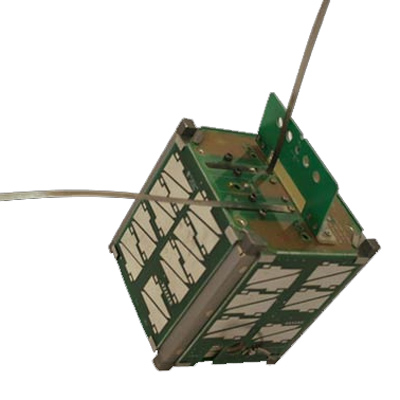
| USC's Aeneas addresses a research thrust of the Department of Homeland Security (DHS): to track cargo containers over the open ocean using a low-power transceiver. USC modified an NRO-specified Colony I bus (C1B) for this mission. This is the third Pumpkin-built Colony I bus to reach orbit. Compared to the first two (QbX1 & QbX2), Aeneas differs in its solar panel layout, choice of processor / PPM, software and ADACS, as well as its payload, a deployable parabolic antenna. Aeneas was carried on a ULA Atlas V from Vandenberg Air Force Base as part of the NASA ELaNa VI launch on September 13, 2012. |
|
| CINEMA | September 13, 2012 | |
|---|---|
|
Structure: Customer-supplied OBC: Pumpkin CubeSat Kit Motherboard (MB) + Pluggable Processor Module D2 (PPM D2) Software: Customer-supplied |
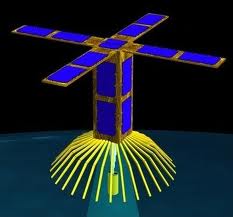
| UC Berkeley's CubeSat for Ions, Neutrals, Electrons, MAgnetic fields (CINEMA) is an NSF-funded CubeSat mission focused on space weather research, and involves a team of US and South Korean organizations. CINEMA operates in a spinning ecliptic-normal attitude in a high inclination orbit, with a projected one-year mission duration. Of particular interest is the high data throughput (~900 MBit/day), enabled via the use of the dsPIC33-based PPM D2. CINEMA was carried on a ULA Atlas V from Vandenberg Air Force Base as part of the NASA ELaNa VI launch on September 13, 2012. |
|
| CSSWE | September 13, 2012 | |
|---|---|
|
Structure: Pumpkin CubeSat Kit Rev D, 3U, solid-wall OBC: Pumpkin CubeSat Kit Motherboard (MB) + Pluggable Processor Module A3 (PPM A3) Software: Pumpkin Salvo 4 for TI's MPS430 RTOS + the Pumpkin CubeSat Kit EFFS-THIN SD Card library |
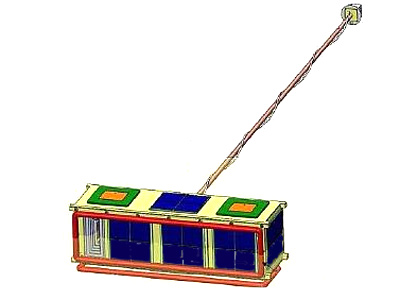
| The Colorado Student Space Weather Experiment (CSSWE) is an NSF-funded 3U CubeSat (30×10×10 cm) which houses an energetic particle telescope. The Relativistic Electron and Proton Telescope integrated little experiment (REPTile) will provide directional differential flux measurements of high-energy electrons and protons. CSSWE was carried on a ULA Atlas V from Vandenberg Air Force Base as part of the NASA ELaNa VI launch on September 13, 2012. It remained operational as of of February 2013. |
|
| GOLIAT | February 13, 2012 | |
|---|---|
|
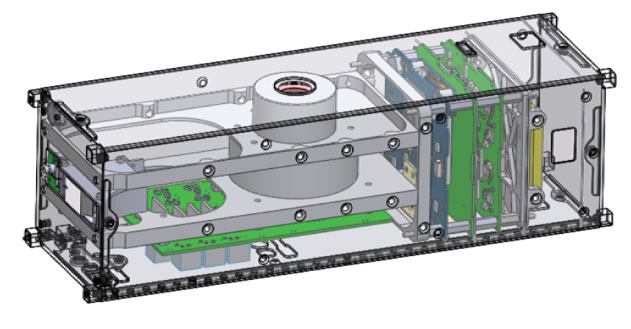
Structure: Pumpkin CubeSat Kit Rev D, 1U, skeletonized OBC: Pumpkin FM430 Rev C Software: Pumpkin Salvo 4 for TI's MPS430 RTOS |
| GOLIAT is the first Romanian nanosatellite. The satellites includes a high resolution digital camera and two scientific experiments that will measure the total dose of radiation and micrometeoroids on low Earth orbit. GOLIAT also incorporates reaction wheels in the CubeSat Kit's Chassis Walls structural elements. GOLIAT also has an MHX-2420 on board. GOLIAT was launched from the Centre Spatial Guyanais (CSG), Kourou, French Guiana on the maiden flight of ESA's Vega rocket with the ALMASat-1 primary spacecraft on February 13, 2012 into an elliptical LEO orbit (300 x 1450km, 69.5 degrees). It has six-month primary mission. |
|
| e-st@r | February 13, 2012 | |
|---|---|
|
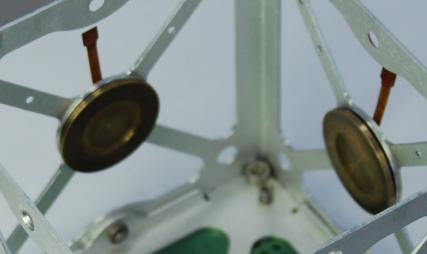
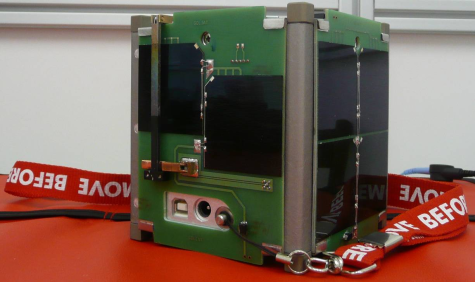
Structure: Customer-supplied OBC: Pumpkin FM430 Rev C Software: Pumpkin Salvo 4 for TI's MPS430 RTOS |
| The e-st@r project is an educational and research program being carried out at Politecnico di Torino by the AeroSpace System Engineering Team (ASSET). e-st@r was launched from the Centre Spatial Guyanais (CSG), Kourou, French Guiana on the maiden flight of ESA's Vega rocket with the ALMASat-1 primary spacecraft on February 13, 2012 into an elliptical LEO orbit (300 x 1450km, 69.5 degrees). |
|

| Radio Aurora Explorer 2 (RAX-2) | October 28, 2011 | |
|---|---|
|
Structure: Pumpkin CubeSat Kit Rev D, 3U, skeletonized OBC: Includes multiple MSP430s Software: UMich-modified Pumpkin Salvo 4 for TI's MPS430 RTOS |
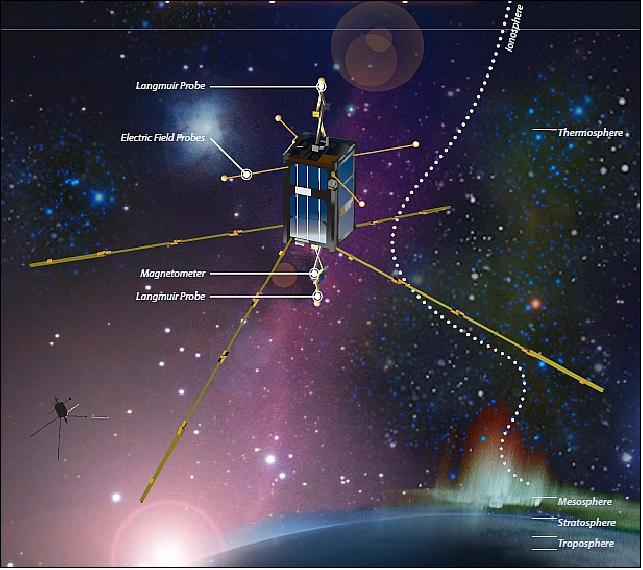
| RAX-2 is the successor to RAX, an NSF-funded 3U CubeSat developed by University of Michigan Engineering and SRI International. It will study large plasma formations in the ionosphere. RAX was launched from Vandenberg, California on a Delta II rocket with the NPP primary spacecraft on October 28, 2011 into a LEO orbit. It has one-year primary and 5-year secondary missions. RAX-2 was deployed from P-POD 3 on this launch. |
|
| Dynamic Ionosphere CubeSat Experiment (DICE-1 & DICE-2) | October 28, 2011 | |
|---|---|
|
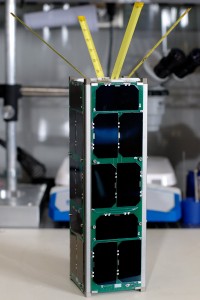
Structure: DICE Consortium OBC: Pumpkin CubeSat Kit Motherboard (MB) + Pluggable Processor Module D1 (PPM D1) Software: Pumpkin Salvo 4 for PIC24 MCUs and dsPIC® DSCs |
| The DICE mission employs a pair of identical spin-stabilized 1.5U CubeSats to " map the geomagnetic SED (Storm Enhanced Density) plasma bulge and plume formations in Earth’s ionosphere." DICE was developed by a consortium including ASTRA LLC, Utah State University / Space Dynamics Laboratory (USU/SDL), Embry-Riddle Aeronautical University and Clemson University. DICE-1 and DICE-2 were launched from Vandenberg, California on a Delta II rocket with the NPP primary spacecraft on October 28, 2011 into a LEO orbit. DICE-1 and DICE-2 were deployed from P-POD 2 on this launch. |
|
| Caerus/Mayflower | December 8, 2010 | |
|---|---|
|
Structure: Customer (bus end) + Pumpkin CubeSat Kit Rev D, 1U, skeletonized (payload end), with Pumpkin Space 56W (8S7P) deployable solar array OBC: Payload: Pumpkin CubeSat Kit Motherboard (MB) Rev D + Pluggable Processor Module (PPM) D1 + Customer-design PIC24-based Pluggable Processor Module Software: Customer-supplied |
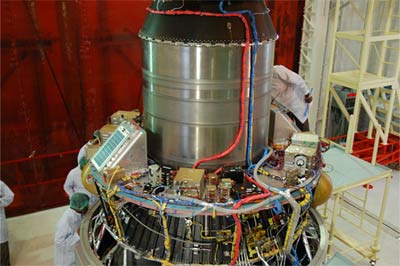
| Caerus is USC's first nanosatellite subsystem. It is a payload on board Northrop-Grumman's next-generation CubeSat Flight Testbed. It is a 3U-size CubeSat with propulsion that has eight Pumpkin deployable solar panels unfurled into a single array. The payload end includes a CubeSat Kit Motherboard (MB) and two PIC24-based Pluggable Processor Modules (PPMs) -- a Pumpkin PPM D1, and a USC/ISI-designed PPM utilizing the same PIC24FJ256GA110 microcontroller. It was launched on the SpaceX Falcon 9 at 10:43 EST on December 8, 2010 from Cape Canaveral into a LEO orbit with a 34.5° inclination. First-day on-orbit telemetry from Caerus/Mayflower indicated that all systems were operating normally. |
|

| QbX1, QbX2 | December 8, 2010 | |
|---|---|
|
Structure: Pumpkin MISC 2 OBC: Pumpkin CubeSat Kit Motherboard (MB) Rev D + Pumpkin CubeSat Kit Pluggable Processor Module (PPM) B1 Software: Customer-supplied |
| QbX1 and QbX2 are the first Colony-class CubeSats to be launched into orbit. They are three-axis stabilized 3U-size CubeSats built on Pumpkin's MISC 2 platform, with deployable solar panels in a "space dart" configuration. The bus end of each QbX incorporates a CubeSat Kit Motherboard (MB), a C8051F120-based Pluggable Processor Module (PPM) B1, an MAI-100 miniature ADACS, and an EPS and LiPo batteries from Clyde Space. The "cargo" end houses the communications system and customer payloads. They were launched on the SpaceX Falcon 9 at 10:43 EST on December 8, 2010 from Cape Canaveral into a LEO orbit with a 34.5° inclination. First-day on-orbit telemetry from QbX1 and QbX2 indicated that all systems were operating normally. |
|

| Radio Aurora Explorer (RAX) | November 19, 2010 | |
|---|---|
|
Structure: Pumpkin CubeSat Kit Rev D, 3U, skeletonized OBC: Includes multiple MSP430s Software: UMich-modified Pumpkin Salvo 4 for TI's MPS430 RTOS |
| RAX is an NSF-funded 3U CubeSat developed by University of Michigan Engineering and SRI International. It will study large plasma formations in the ionosphere. RAX was launched from Kodiak, Alaska on STP-S26 on a Minotaur IV on November 19, 2010 into a 650km circular LEO orbit with 72° inclination. It has one-year primary and 5-year secondary missions. |
|
| AIS Pathfinder 2 (RUBIN-9.1) | September 23, 2009 | |
|---|---|
|
Structure: LUXSPACE OBC: Pumpkin CubeSat Kit FM430 Rev C Software: LUXSPACE + Salvo Pro 4 for TI's MSP430 RTOS |
| AIS Pathfinder 2 was developed by LUXSPACE Sarl of Luxemburg as an Automated Idenfication System (AIS) for maritime applicatons. AIS Pathfinder 2 is one of Rubin 9's two attached payloads. AIS Pathfinder 2 is mounted at 45 degrees to the PSLV EB deck it was launched on. LUXSPACE used the FM430 as AIS Pathfinder 2's OBC. AIS Pathfinder 2 was launched from India on the PSLV-C14 along with three other CubeSats on September 23, 2009 into LEO. As of September 23, 2010, the FM430 and the Salvo RTOS-based software on AIS Pathfinder 2 had operated continuously since launch for over one year without any reset events. |
|
| ITU-pSAT1 | September 23, 2009 | |
|---|---|
|
Structure: Pumpkin CubeSat Kit Rev D, 1U CubeSat C&DH: Pumpkin CubeSat Kit FM430 Rev C Software: ITU SSDTL software |
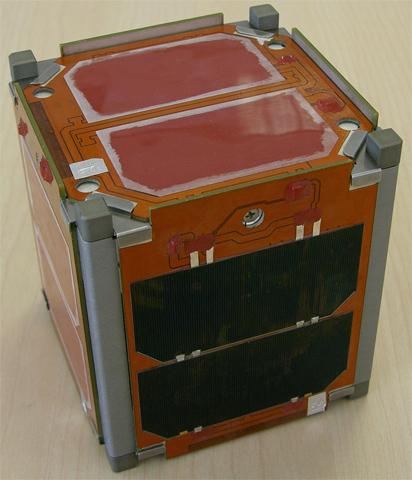
| ITU-pSAT1 is ITU SSDTL's first CubeSat. ITU-pSAT1 carries a camera, magnetometer, accelerometers and other payload instruments. This is the first Rev D CubeSat Kit launched. ITU-pSAT1 has multiple PIC microcontrollers functioning as distributed payload processors. These processors interface to the SD Card in the Pumpkin FM430 via the CubeSat Kit Bus. When the FM430 C&DH needs to transmit data collected by the payload processors, it reads the SD Card via the EFFS-THIN flash file system software that is included in each CubeSat Kit. ITU-pSAT1 also carries a Microhard MHX425 transceiver operating in the UHF band -- all of Microhard's newer MHX units (MHX425, MHX920, MHX2420 et. al.) run a version of Pumpkin's Salvo RTOS that was customized by Microhard for use with the Hitachi SH2 processor. ITU-pSAT1 was launched from India on the PSLV-C14 along with three other CubeSats on September 23, 2009 into LEO. As of April 2010, ITU-pSAT1 had been operational for over 200 days without any known reset events. |
|
| HawkSat-1 | May 19, 2009 | |
|---|---|
|
Structure: Pumpkin CubeSat Kit Rev C, 1U CubeSat C&DH: Pumpkin CubeSat Kit FM430 Rev C Software: HISS software |
| HawkSat-1 is a proof-of-concept vehicle for future satellites to be developed by the Hawk Institute for Space Sciences (HISS). HawkSat-1 also carries a customer payload developed by a major aerospace firm. This experiment contains an external payload board which exposes newly developed materials to the radiation and temperatures encountered in the space environment. HawkSat-1 was launched from the Mid-Atlantic Regional Spaceport range of NASA's Wallops Flight Facility on May 19, 2009 23:55 UTC into LEO. |
|

| Delfi-C3 | April 28, 2008 | |
|---|---|
|
Structure: Pumpkin CubeSat Kit Rev C, 3U CubeSat C&DH: Pumpkin CubeSat Kit FM430 Rev C Software: Delfi-C3 team software |
| Delfi-C3 is the first nanosatellite student project from the Delft University of Technology. Delfi-C3 is a battery-less CubeSat with multiple processors and transmitters. Delfi-C3 was launched from the SHAR range of Sriharikota in India on the PSLV-C9 launch vehicle on April 28, 2008 03:53 UTC into LEO. SFL/UTIAS provided launch integration services for multiple CubeSats with their X-POD line of CubeSat deployers. Telemetry from Delfi-C3 was acquired and decoded within a few hours of launch. The Delfi-C3 offers the free RASCAL telemetry decoding software on their website. As of late March 2010, the FM430 on Defli-C3 had been operating continuously since launch for over 700 days without any reset events. |
|
| MAST | April 17, 2007 | |
|---|---|
|
Structure: TUI-designed, with 3 major assemblies forming a 3U CubeSat C&DH: TUI-designed "Magic Board" (x3) RTOS: Pumpkin Salvo Pro v3.2.3 for PICmicro® MCUs (x3) |
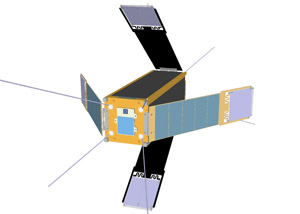
| MAST is a 3U-size CubeSat developed by Tethers Unlimited (TUI). Pumpkin was approached by TUI to provide an RTOS for the PIC18-based C&DH "Magic Boards", one of which was present in each of MAST's three picosatellites -- Ted, Gadget and Ralph. An unmodified version of the Salvo RTOS for PICmicro® MCUs was ultimately used, with all programming by TUI. MAST was launched from the Baikonur cosmodrome in Kazakhstan on April 17, 2007 into LEO. While the MAST mission had some problems (the tether failed to deploy in the expected / desired manner, some batteries were likely exhausted before contact was attempted, etc.), the Salvo RTOS functioned error-free on the sole Magic Board with which radio contact was established. |
|
Libertad-1 | April 17, 2007 |
|
|---|---|
|
Structure: Pumpkin CubeSat Kit Rev B, 1U CubeSat C&DH: Pumpkin CubeSat Kit FM430 Rev B RTOS: Pumpkin Salvo Pro 4 for TI's FM430 RTOS |
|
Libertad-1 is Colombia's first satellite. It was developed by a novice team of only 8 members with no prior satellite experience at the Universidad Sergio Arboleda at a total cost of under $250k. Cal Poly handled launch integration, etc. A modern-day Sputnik, Libertad-1 was launched from the Baikonur cosmodrome in Kazakhstan on April 17, 2007 into LEO. LTAN: 22:30 UTC, 98 degrees inclination, 1hr 39min period, 787.5km apogee, 659.56km perigee, 0.0090 eccentricity. Libertad-1 functioned flawlessly, transmitting continuously without any reset events for the 34-day duration of its mission. The mission was terminated when the primary batteries were exhausted (Libertad-1 had no solar arrays). The Libertad-1 missions is considered a great success in Colombia. The FM430 on Libertad-1 operated continuously over the entire duration of the mission without any reset events. |
|